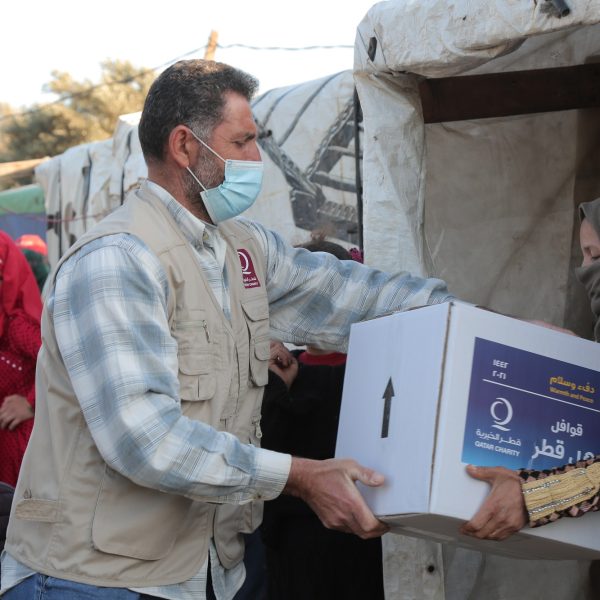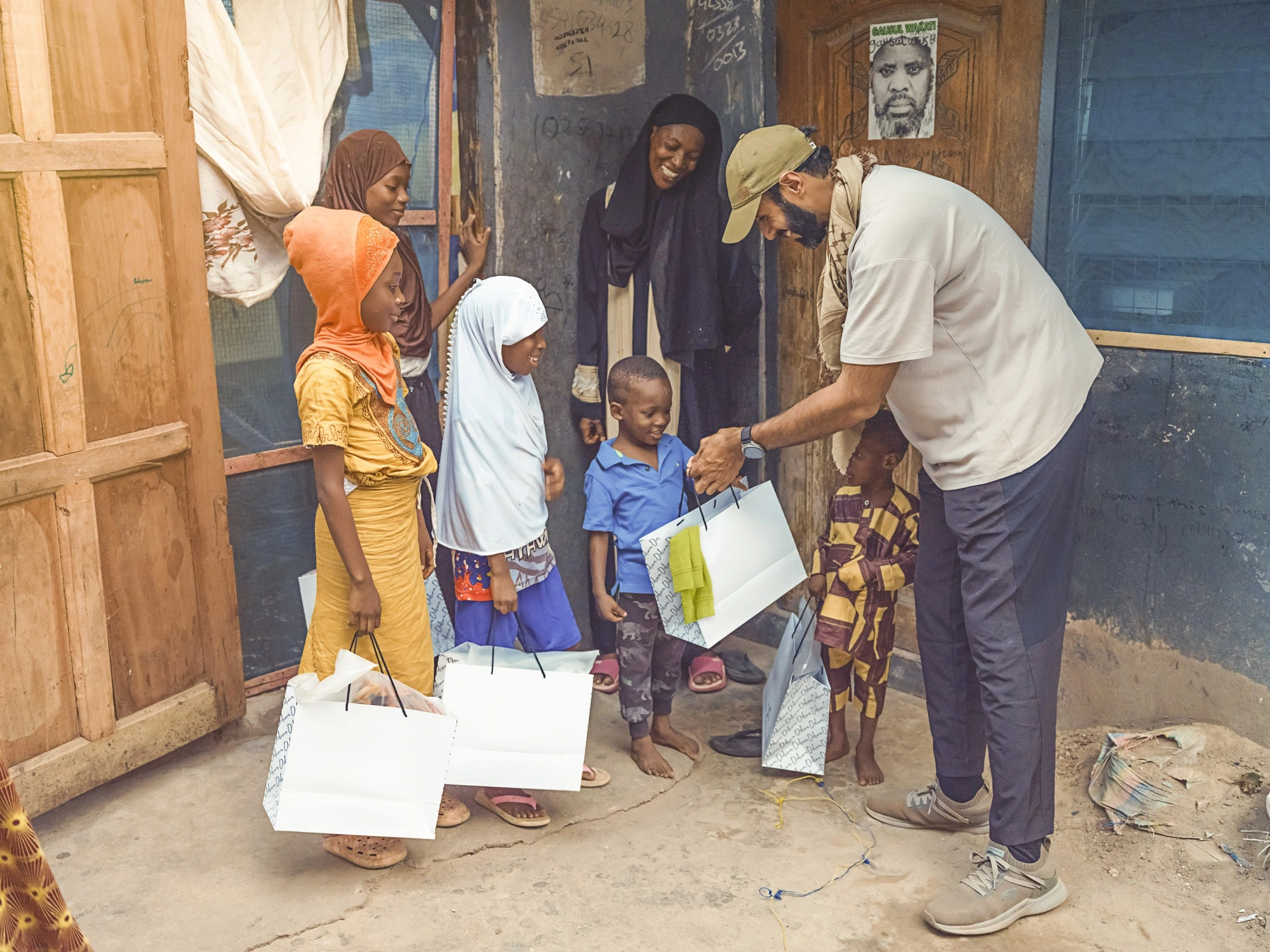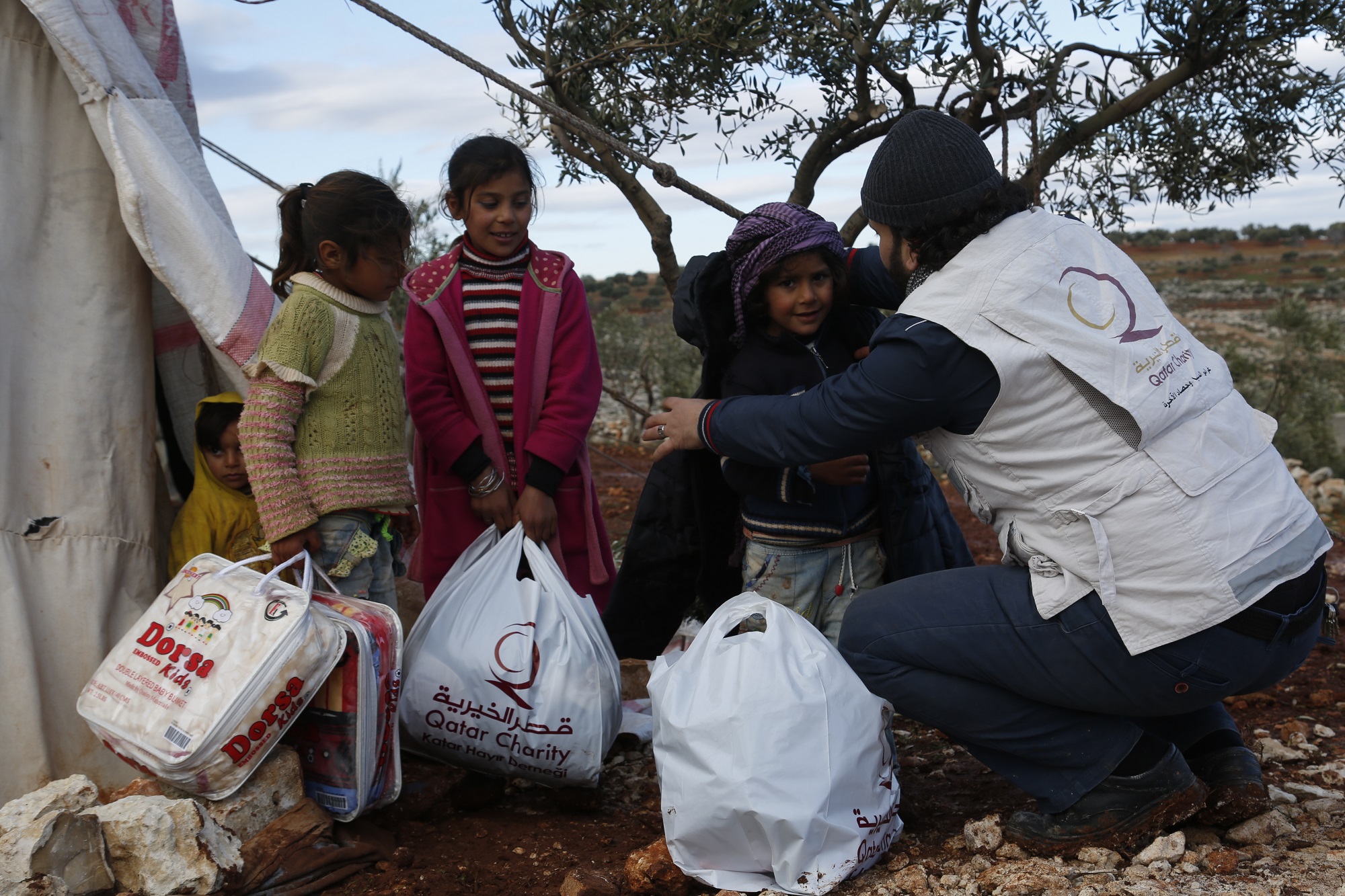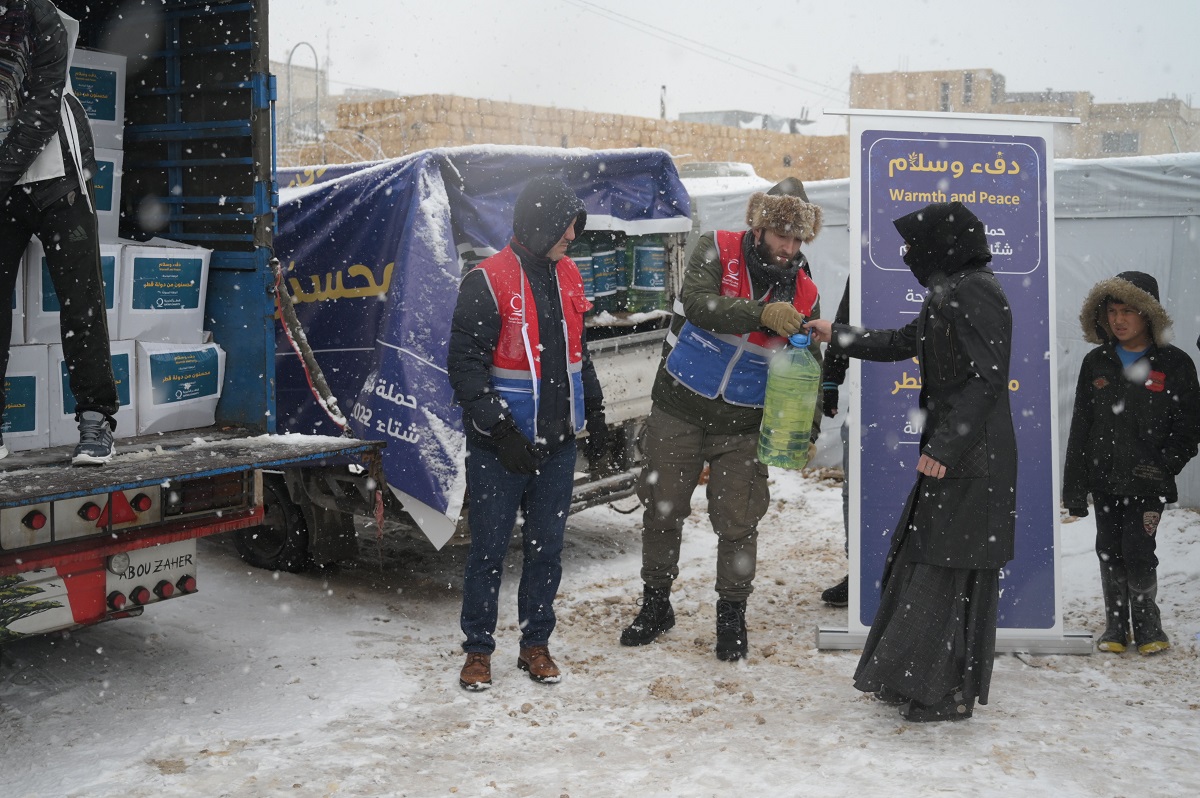
Providing winter aid means getting a food basket, a blanket, shelter and heating fuel to families whose walls cannot keep out the cold or the rain. Qatar Charity’s 2026-2027 Winter Heroes campaign aims to reach 532,115 beneficiaries in 8 countries, more than half of them through food security projects.
In brief
- The Winter Heroes campaign aims to reach 532,115 beneficiaries in 8 countries through 23 interventions.
- Food security accounts for 56% of targeted beneficiaries, winter aid 23%, heating and energy 11%, and shelter 10%.
- The World Health Organization links poor housing to respiratory and cardiovascular diseases.
- In Somalia, Djibouti and Kenya, aid focuses on shelter and food during the rainy season and displacement.
Why Do Displaced Families Need Winter Aid?
Because a tent or temporary shelter does not hold the warmth of a home. The World Health Organization says poor housing is associated with a wide range of health conditions, including respiratory diseases such as asthma, cardiovascular diseases, injuries and infectious diseases such as influenza, according to the WHO Housing and health guidelines.
The same guidelines cover low indoor temperatures and note that efficient and safe thermal insulation can improve indoor temperatures that support health. That is exactly what a family spending winter in a tent or a damaged house is missing.
What Winter Aid Does the Winter Heroes Campaign Provide?
Aid is spread across four areas, by number of targeted beneficiaries in the campaign plan:
- Food security: 297,570 beneficiaries (56%), through food baskets in all eight countries.
- Winter aid: 122,330 beneficiaries (23%), including clothing, blankets and winter kits.
- Heating and energy: 59,665 beneficiaries (11%), through heating fuel, firewood and gas refills.
- Shelter: 52,550 beneficiaries (10%), through tents, shelter kits and shelter construction.
You can find what the baskets and kits contain in Winter campaign relief items.
Where Does Winter Aid Go This Year?
The campaign works in 8 countries. These are the targeted beneficiaries in each:
- Pakistan: 147,000 beneficiaries, with 18,000 food baskets and 3,000 cold-resistant tents.
- Lebanon: 130,000 beneficiaries among refugees and host communities, with food baskets, fuel and clothing vouchers, and 15,000 winter blankets.
- Bangladesh: 93,715 beneficiaries in the Rohingya camps, with food baskets, 9,533 gas cylinder refills and 210 shelters built or rehabilitated.
- Afghanistan: 70,000 beneficiaries, with food baskets, winter clothing, firewood, mattresses and blankets.
- Sudan: 32,330 beneficiaries, with food baskets, tents and winter kits.
- Somalia and Kenya: 20,285 beneficiaries each, and Djibouti: 18,500 beneficiaries, with food baskets and shelter kits, plus tents in Djibouti.
How Do Shelter and Heating Protect Families in Winter?
Shelter is the first line of defence against cold and rain. In Bangladesh, shelters are built with metal frames, treated bamboo, weatherproof roofs and thermal insulation. In Pakistan, cold-resistant tents are distributed, and in Somalia, Djibouti and Kenya, shelter kits include plastic sheeting, blankets, mats and solar lamps.
Heating needs safety before warmth, which is why gas cylinders in the Rohingya camps are filled to international safety standards. To learn about the risks of heating inside tents and how to avoid them, read Safe heating in camps.
How Can You Help Provide Winter Aid?
You can become one of the Winter Heroes by donating a food basket, a blanket, shelter or heating fuel through Qatar Charity’s donation page. You will find more ways to help in Helping families in winter.
Winter Aid, Housing and Health
What areas do the WHO Housing and health guidelines cover?
Four areas: inadequate living space (crowding), low and high indoor temperatures, injury hazards in the home, and accessibility of housing for people with functional impairments, according to the World Health Organization.
Does thermal insulation of homes benefit health?
Yes. The World Health Organization says efficient and safe thermal insulation can improve indoor temperatures that support health, while also lowering energy spending and carbon emissions, according to the WHO Housing and health guidelines.
Which country has the largest Winter Heroes target?
Pakistan, with 147,000 beneficiaries through 18,000 food baskets and 3,000 cold-resistant tents, followed by Lebanon with 130,000 beneficiaries.
What is in a shelter kit in Somalia, Djibouti and Kenya?
A cooking set, plastic sheeting, blankets, plastic mats and solar lamps.