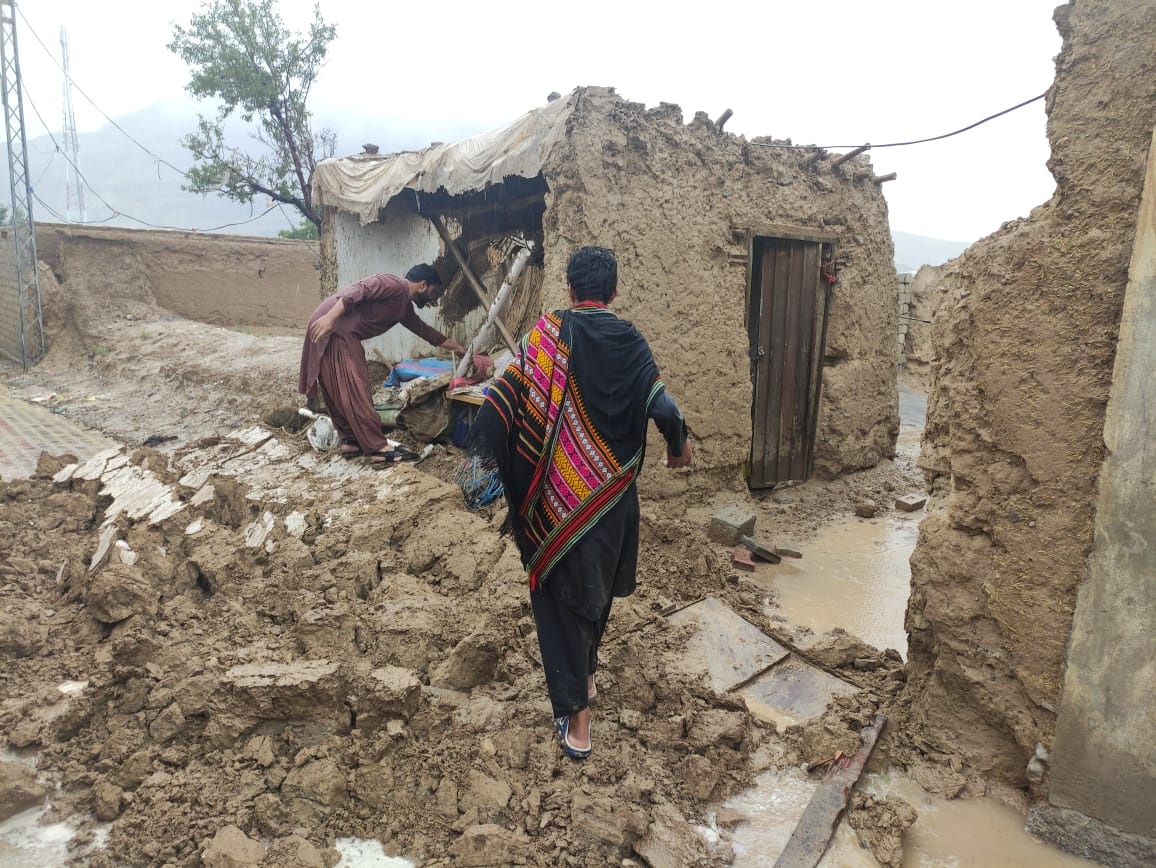

School dropout is rarely an educational decision. The child does not leave their seat because they came to hate study, but because something outside the classroom became heavier than staying in it: hunger, work, or distance. The global figures reveal a subtle paradox: completion rates are rising, with primary completion reaching 88 percent in 2024 against 77 percent in 2000, while the number of children out of school is rising again by 3 percent since 2015 (UNESCO, Global Education Monitoring Report 2026). That is, those who enter school now stay longer, and those who never enter grow in number.
The place looks like a school! But there is nothing to suggest movement there, even though the school year was at its peak.
Pupils slip away quietly and do not return … these are the repeated cases of school dropout among them .. Silence hangs over the place. And the specter of “hunger” besieges the Eid Abu Zeid Basic School in the southern countryside of the Omdurman locality, thirteen kilometers west of the Sudanese capital Khartoum.
How big is school dropout worldwide?
The global picture is improving and worsening at the same time. Completion rates rose at every stage between 2000 and 2024: primary from 77 percent to 88 percent, lower secondary from 60 percent to 78 percent, and upper secondary from 37 percent to 61 percent (UNESCO, 2026). But at the same time there are 273 million children and adolescents out of school according to 2024 data, 130 million of them of upper secondary age (UNESCO).
The upshot is that dropping out of study is no longer the first problem everywhere, but it remains the most serious problem where need meets a lack of support. And the higher the school stage, the wider the gap: about four in ten young people in the world do not complete secondary education.
Why does a child leave their school seat?
The causes repeat across countries with differing intensity, the most prominent being:
- Hunger. A child who spends their school day without food cannot take in lessons, then does not succeed, then does not come back.
- Indirect cost of education. Uniform, bag and transport, items that free education does not remove.
- Child labor. An immediate income tempts the family more than a return that comes ten years later.
- Distance from school and the lack of safe transport, whose effect on girls is harsher.
- Conflict and displacement, which are the widest in effect among the education challenges.
Young children in first, second and third grade and the rest of the eight classes, some of them no older than six, spend their whole school day without eating breakfast until they return home. When they arrive they race to drink water and share what their small bags hide of dry bread.
Misery and severe hardship live in every corner there .. and the area records the highest dropout rate from education.
The number of pupils keeps falling. And the morning “assembly line” shrinks and dwindles, the reason known to the school administration and before it to the Sudanese Ministry of Education, which acknowledged in an official statistic that there are nearly six million children who cannot afford the price of a breakfast meal in schools across the Sudanese states.
The same statistics also indicate that Khartoum state, the outlying schools in particular, has the lion’s share of that.
After this shocking statistic on school dropout was published, many local organizations called for donations to prepare simple breakfast meals for these pupils.
Brilliant results after the launch of the “Pupil’s Breakfast” project
But they only managed to cover a limited number of schools. Until Qatar Charity, in coordination with the Sudanese organization “Mujaddidoun” (the implementing body), launched within its humanitarian programs in Sudan the “Pupil’s Breakfast” project. That was during the 2016 – 2017 school year under the slogan “A Community Where the Young Do Not Go Hungry”. The aim was to encourage pupils to attend and continue study, raise their level of academic achievement, improve their health, raise their capacity to absorb lessons and address the phenomenon of school dropout.
The project targeted sixteen schools in the outlying and deprived areas of the capital Khartoum in four localities of the state, with a budget of QAR 500,000.
According to the results of the school year that ended in the past few days, the project achieved its desired goals in its first experience. But the gap is still wide, as many schools still suffer from the same reality, especially in the states, from the extreme hardship that deprived young pupils of a morning breakfast and pushed them to leave their school seats.
Of course the situation changed for the better, judging by the “Eid Abu Zeid” school in the Omdurman locality. Although the school was on holiday, Mr. Abdel Azim Farah, a son of the area, insisted that we visit the area and the school to see the pupils’ results after the “Pupil’s Breakfast” project was carried out. So that it would be an incentive for donors from Qatar or elsewhere to widen the umbrella of the project to include many affected people in distant regions and states.
The pupils’ breakfast meal limits the dropout rate
“Before the start of the pupil’s breakfast project the picture was completely different in the 2015 – 2016 school year. There was a high rate of pupils leaving school seats, in addition to a frighteningly low success rate. The average class had at least between 35 and 45 male and female pupils, but it fell to 21 pupils.
Indeed some other classes, especially the basic ones from first to third grade, had no more than 9 pupils. The school’s total number of pupils was 361. During half a year the number fell to only 197 male and female pupils.
But after the start of the “Pupil’s Breakfast” project, the rates of the 2016 – 2017 school year made a big leap and the school saw relative stability. The dropout rate fell after the school administration notified the pupils’ families in the village that a breakfast meal from “Qatar Charity and Mujaddidoun” was available to pupils, along with school bags and uniforms, and so on.
The result of the 2017 school year and academic achievement carried good news that planted hope in the hearts of the young and the teachers, as the success rate rose to 53 percent. The dropout rate from classes fell greatly and the total number of pupils grew to 241 male and female pupils. The indicators for the coming school year also promise the return of stability to the school. But on condition that support continues and the slogan “For a community where the young do not go hungry” is achieved.
We hope that the hands of the people of goodness will extend to spread the experience to other areas of greater need in a vast country that needs a lot.
What the meal did here is not a Sudanese exception. When the immediate obstacle in front of the family is removed, the child returns. That is why the most effective intervention against dropping out is what lowers the daily cost of staying in school, not preaching to the family about the importance of the benefits of education.
Frequently asked questions about leaving school
What is school dropout?
It is a student leaving their school seat before completing the stage they joined, whether they drop out permanently or are absent until they lose their year. It differs from never enrolling at all, which is what the figure of 273 million children out of school measures.
What are the main reasons children leave school in low-income countries?
Hunger, the indirect cost of education, child labor, distance from school and conflicts. Most are economic, not educational, which is why interventions that lower the daily cost to the family succeed with them.
Does a school breakfast meal really limit dropout?
At the Eid Abu Zeid school in Omdurman the number of pupils rose from 197 to 241 within a year after the “Pupil’s Breakfast” project was launched, and the success rate reached 53 percent. The meal addresses a direct cause of dropping out, which is what makes its effect fast.
How can I help keep children in their schools?
By supporting what keeps the child in school: school feeding, the bag and uniform, and sponsoring a student of knowledge, which covers the cost of their continuing year after year.
One meal brought forty-four pupils back to their classes. Contribute to supporting education through Qatar Charity.
Mohamed Jadeen
Note: The article expresses the opinion of the writer and does not necessarily reflect the point of view of Qatar Charity.