
Sadaqah (charity) is what a Muslim gives from his wealth to draw closer to Allah, whether it is obligatory like Zakat or voluntary. Every Zakat (also spelled Zakah) is Sadaqah, but not every Sadaqah is Zakat (Islamweb explains. Among its virtues: it does not decrease wealth, as Allah blesses what remains and replaces what was given; it wards off harm from the giver, by Allah’s permission; Allah multiplies its reward even if it is half a date; and the one who gives in secret will be in the shade of Allah on the Day of Resurrection.
- Sadaqah does not decrease wealth; the increase comes as blessing in what remains, as a replacement from Allah, or as reward in the Hereafter.
- There is no minimum for voluntary Sadaqah, and a small amount still earns a multiplied reward.
- Giving in secret is better in principle, and giving openly can be better when it serves a clear benefit.
- Voluntary Sadaqah may be given to a non-Muslim who is not at war with Muslims; Zakat is for Muslims only.
- Some sayings shared about Sadaqah are not authentic, such as the hadith about giving charity early in the morning.
What is Sadaqah, and how is it different from Zakat?
Sadaqah is a general term for anything a Muslim gives to draw closer to Allah. Zakat is one of the pillars of Islam: a set share of specific kinds of wealth, due under set conditions, and paid to the eight categories named in verse 60 of Surat At-Tawbah. So Sadaqah is the wider term, and Zakat is one kind of it.
Sadaqah comes in three kinds: obligatory Zakat, Zakat al-Fitr, and voluntary Sadaqah. Voluntary Sadaqah is open to anything that benefits people, such as building mosques, providing drinking water, building roads, and giving food and clothing. One practical difference: voluntary Sadaqah may be given to a non-Muslim who is not at war with Muslims, while Zakat is given only to Muslims.
The virtues of Sadaqah in this life
Does Sadaqah decrease wealth?
No. The Prophet ﷺ said: “Charity does not decrease wealth” (Muslim). Scholars explain the increase in three ways: blessing that Allah places in what remains, protecting it from loss; a replacement from Allah’s provision; or reward stored for the Hereafter. Allah says: “But whatever thing you spend [in His cause] – He will compensate it; and He is the best of providers” [Saba 34:39]. In Al-Bukhari and Muslim, two angels descend every day, and one of them says: “O Allah! Compensate every person who spends in Your Cause.” The replacement is not necessarily ten times what was given; Allah knows its measure.
Does Sadaqah ward off harm?
Yes. Sadaqah is one of the means by which Allah wards off harm from the giver, and it is among the acts of kindness described in the hadith that acts of kindness protect against evil ends (At-Tabarani, graded hasan by Al-Albani). Ibn al-Qayyim stated that Sadaqah has a remarkable effect in warding off many kinds of harm. Giving with the intention of bringing good and averting harm is lawful, and giving purely to draw closer to Allah earns a greater reward.
Can I give Sadaqah with the intention of healing a sick person?
Yes. Giving Sadaqah hoping that Allah will cure a sick person is a good deed, because it is seeking Allah’s help through a righteous deed, which is lawful. As for the hadith about treating the sick with Sadaqah, its chain of narration has been criticised, but the general legitimacy of seeking Allah’s help through good deeds supports its meaning. The sick person is advised to do as many acts of worship as he is able.
What does Sadaqah do for the heart?
Ibn al-Qayyim listed benefits of Sadaqah that only Allah can count. Among them: it brings joy to the heart, purifies the soul, makes the servant beloved to Allah and to people, draws people’s prayers and affection, eases hardships, and leads to other good deeds. These are scholars’ statements on the effects of Sadaqah, not hadiths of the Prophet ﷺ.
The virtues of Sadaqah in the Hereafter
Allah multiplies its reward, even when it is small
Allah says: “The example of those who spend their wealth in the way of Allāh is like a seed [of grain] which grows seven spikes; in each spike is a hundred grains. And Allāh multiplies [His reward] for whom He wills” [Al-Baqarah 2:261]. The Prophet ﷺ said that Allah accepts good Sadaqah and raises it for its giver until it becomes greater than a mountain, even if it was a single date (Muslim), and he said: “Save yourself from Hell-fire even by giving half a date-fruit in charity” (Al-Bukhari and Muslim). That is why there is no minimum for voluntary Sadaqah; a small amount is still a great act of charity, hoped to be accepted.
It extinguishes sins
The Prophet ﷺ said: “charity extinguishes sins like water extinguishes fire” (At-Tirmidhi). Sadaqah with money or otherwise, such as planting a tree that people benefit from, is among the good deeds that expiate sins, although whether a particular sin is forgiven is known only to Allah.
Shade on the Day of Resurrection
Among the seven whom Allah will shade on the Day of Resurrection is “a person who practices charity so secretly that his left hand does not know what his right hand has given” (Al-Bukhari and Muslim). A person will be in the shade of his Sadaqah on that Day.
Secret or open Sadaqah: which is better?
In principle, giving in secret is better, because it is closer to sincerity and further from showing off, as verse 271 of Surat Al-Baqarah states that concealing it is better. Giving openly can be better when it brings a clear benefit, such as encouraging others to give, as long as the giver guards against showing off and reminding people of his favour.
Popular sayings about Sadaqah that are not authentic
The virtue of Sadaqah is established by authentic evidence, so there is no need for what is not proven. Among the sayings that circulate but are not authentic:
- The hadith telling people to give charity early because calamity does not pass charity: scholars graded it very weak, and Ibn al-Jawzi listed it among fabricated reports. There is also no basis in the Quran or Sunnah for the name “dawn Sadaqah”.
- “Sadaqah closes seventy doors of evil”: no authentic hadith says this.
- “Sadaqah prevents burning and drowning”: not authentic, and its chain is worthless.
Where should you give your Sadaqah?
The reward of Sadaqah grows when it is given in secret, when it goes to those in greater need, and when the giver gives it while in good health. Sadaqah to a relative earns two rewards, as the Prophet ﷺ said that it counts as both charity and keeping family ties (At-Tirmidhi). It may be given directly to a deserving person, or to a trusted organisation that delivers it to those entitled to it. Ongoing charity (Sadaqah Jariyah), such as a well or a tree that people benefit from, is better than one-off giving, because its reward continues after the giver’s death.
How to give Sadaqah through Qatar Charity
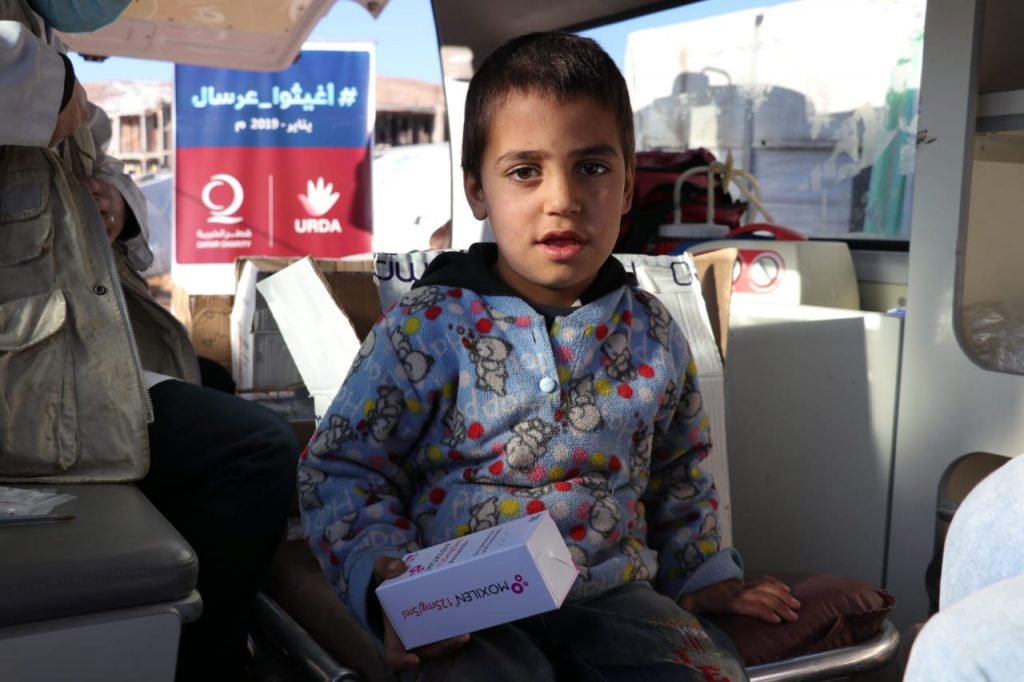
You can give your Sadaqah through the Qatar Charity donation page, or through the Qatar Charity app, which offers recurring giving, Sadaqah Jariyah and orphan sponsorship, so that Sadaqah becomes a steady habit rather than a seasonal one. During winter, you can also read Winter Relief: Questions and Answers.
Sadaqah in five questions
What is Sadaqah?
What a Muslim gives from his wealth to draw closer to Allah, whether obligatory like Zakat or voluntary. Every Zakat is Sadaqah, but not every Sadaqah is Zakat.
Does Sadaqah decrease wealth?
No. The Prophet ﷺ said: “Charity does not decrease wealth” (Muslim). The increase comes as blessing in what remains, a replacement from Allah, or reward in the Hereafter.
Is the hadith about giving charity early in the morning authentic?
No. Scholars graded it very weak, and Ibn al-Jawzi listed it among fabricated reports. Warding off harm through Sadaqah is established by other evidence.
Can Sadaqah be given to a non-Muslim?
Yes. Voluntary Sadaqah may be given to a non-Muslim who is not at war with Muslims. Zakat, however, is given only to Muslims.
Which is better: secret or open Sadaqah?
In principle, secret giving is better because it is further from showing off. Giving openly can be better when it brings a clear benefit, such as encouraging others to give.
Start today, even with a little: Give Sadaqah through Qatar Charity