
The term disability refers to a total or partial impairment, permanent or lasting for a long part of life, in one of the physical, sensory, mental, communication, learning or psychological abilities, which makes it impossible for the person with a disability to meet the requirements of ordinary life and makes them depend on others to meet them, or need a special tool that requires special training or rehabilitation to use well.
Their sponsorship rests on the same principles as orphan sponsorship, which you can find in the guide Orphan Sponsorship: Its Rulings and How to Begin Today.
Caring for people with disabilities and taking charge of their affairs is a communal obligation on the Muslim nation, so that it is sinful if their rights are neglected. Among the most binding duties of the nation, rulers, individuals, organizations and charities alike, is to care for these people who are physically weak, look after them and lift injustice from them. The Prophet (peace be upon him) said: “Seek out the weak for me, for you are given provision and victory only through your weak” (narrated by Abu Dawud), and he said: “Are you given victory and provision except through your weak?” (narrated by al-Bukhari). They are among the most sincere of people in supplication and among the most humble in worship, because their hearts are far from attachment to the ornaments of this world. The weak person, when they see their helplessness, often disowns all power and strength and seeks God’s help, unlike the strong person, who is often deceived by their strength, admires themselves and relies on their ability.

The greatest acts of righteousness
Meeting people’s needs and doing good to them is among the greatest acts of righteousness, and scholars have preferred deeds whose benefit extends to others over private benefit. The encouragement for this is established, as in the Sahihs of al-Bukhari and Muslim and others, that the Prophet (peace be upon him) said: “A Muslim is the brother of a Muslim: he does not wrong him or hand him over. Whoever is in the need of his brother, God is in his need. Whoever relieves a Muslim of a hardship, God will relieve him of a hardship on the Day of Resurrection. And whoever covers a Muslim, God will cover him on the Day of Resurrection.”
In Sahih Muslim and the Musnad of Ahmad and others, the Prophet (peace be upon him) said: “Whoever relieves a believer of a hardship of this world, God will relieve him of a hardship of the Day of Resurrection. Whoever makes things easy for one in difficulty, God will make things easy for him in this world and the next. Whoever covers a Muslim, God will cover him in this world and the next. And God is in the aid of a servant as long as the servant is in the aid of his brother.”
It is reported from Ibn Umar, may God be pleased with them both, that a man came to the Prophet (peace be upon him) and said: “O Messenger of God, which people are most beloved to God? And which deeds are most beloved to God?” The Messenger of God (peace be upon him) said: “The most beloved of people to God is the one most beneficial to people, and the most beloved of deeds to God is a joy you bring to a Muslim, or a hardship you remove from him, or a debt you pay for him, or hunger you drive away from him. And for me to walk with a brother in his need is dearer to me than to go into retreat in this mosque,” meaning the mosque of Medina, “for a month. Whoever holds back his anger, God will cover his faults. Whoever restrains his rage, though he could act on it, God will fill his heart with hope on the Day of Resurrection. And whoever walks with his brother in his need until he secures it for him, God will make his feet firm on the day when feet slip.” Ibn Abi al-Dunya recorded it in his book Meeting Needs, and al-Tabarani and others, and al-Albani graded it good. This last hadith shows that striving in the needs of Muslims is preferable to a month of retreat.
The special standing Islam gave people with disabilities
People with disabilities in Islam received every honor, care and attention, both morally and in law. Islam made helping the afflicted and those with a disability, such as the blind and the deaf, one of the doors of charity. Abu Dharr al-Ghifari, may God be pleased with him, said: the Messenger of God (peace be upon him) said: “Every person owes charity on every day the sun rises. I said: O Messenger of God, from where do we give charity when we have no wealth? He said: Among the doors of charity are saying takbir, subhan Allah, alhamdulillah, la ilaha illa Allah, astaghfir Allah, enjoining what is right and forbidding what is wrong, removing thorns, bones and stones from people’s path, guiding the blind, making the deaf and mute hear until they understand, directing someone who seeks directions to what they need when you know where it is, running with your legs to one in distress who cries for help, and lifting with the strength of your arms for the weak. All of that is charity from you for yourself, and in marital relations with your wife you have reward.” The hadith was narrated by Ahmad, in his wording, and its meaning is also in Muslim.
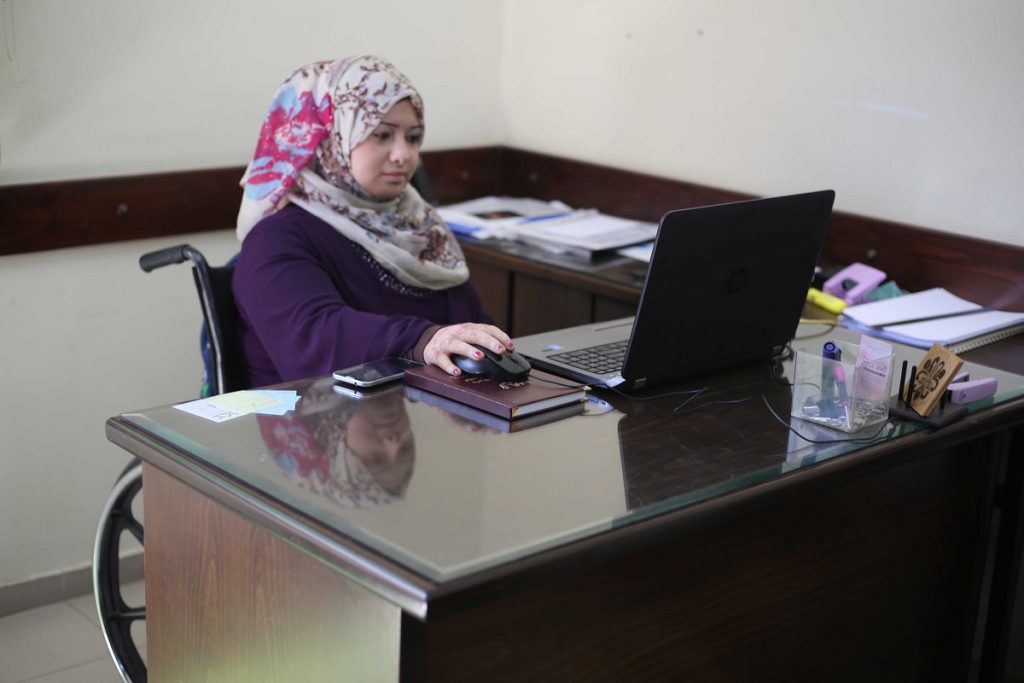
Abu Dharr, may God be pleased with him, said: I said: O Messenger of God, which deeds are best? He said: “Faith in God and striving in His cause.” I said: which slaves are best to free? He said: “The most precious to their owners and the most expensive.” He said: I said: and if I cannot? He said: “Help a craftsman or work for one who is clumsy” (“clumsy” means one with no sense or no craft). He said: I said: O Messenger of God, if I am too weak for some of these deeds? He said: “Keep your harm from people, for that is charity from you for yourself” (narrated by Muslim in the Book of Faith). In this is a legal indication of the duty to sponsor people with disabilities, in health, social, economic and psychological terms, and to work to meet their needs and fill their requirements. Caring for people with disabilities and taking charge of their affairs is a communal obligation on the nation: if some carry it out the sin is lifted from the rest, and if no one does, all are sinful. Forms of this care include:
- Treatment and periodic check-ups for them.
- Their rehabilitation and education to the extent their abilities and levels allow.
- Employing those who care for and serve them.
- Meeting their basic and living needs, since they are weak and unable to provide them for themselves.
Anyone who reads Islamic history sees how Muslim caliphs cared for people with disabilities in every age, how they set endowments for them, built care homes for them and spent on them as they did for orphans and foundlings. The rightly guided Caliph Umar ibn Abd al-Aziz, may God be pleased with him, issued a decision to the provinces: “Bring to me every blind person in the register, or lame, or paralyzed, or anyone with a chronic condition that prevents them from standing for prayer.” They brought them, and he ordered for each blind person an attendant to lead and care for them, and for every two of the disabled an attendant to serve and care for them. The Umayyad Caliph al-Walid ibn Abd al-Malik, may God have mercy on him, followed the same path: he was the one who had the idea of establishing institutes or care centers for people with disabilities, and in [707 CE, 88 AH] he established an institution specialized in their care, employed doctors and attendants in it and paid them salaries, and gave people with disabilities a regular salary, saying to them: “Do not ask people,” and so he spared them from asking people, and appointed a servant for every crippled, lame or blind person.
Islam also commanded visiting people with disabilities, and not leaving or isolating them, out of mercy for them. The Prophet (peace be upon him) often visited the weak and the helpless. Al-Bayhaqi, al-Bazzar and al-Mundhiri narrated from the hadith of Jubayr ibn Mut’im that the Messenger of God (peace be upon him) said to them: “Come with us to the Banu Waqif to visit the sighted man” (and this was a blind man). So people with disabilities came to have their protected standing in Islamic society, and became an active part of its fabric, unlike other civilizations that thought them a curse, kept them away and shunned them.
Notable figures with “disabilities” who made our glories
Many of the most prominent figures in our Islamic history had impairments and special needs. Among them is the noble Companion Ibn Umm Maktum, may God be pleased with him, whom the Messenger of God (peace be upon him) twice left in charge of Medina while he was blind, and who was also his muezzin. The Messenger of God (peace be upon him) chose Mu’adh ibn Jabal, who was lame in one foot, and sent him as judge and governor to Yemen, so his disability did not stop him from holding high office. Abdullah ibn Abbas, may God be pleased with them both, was blind, yet that did not stop him from becoming the scholar of the nation and first of the scholars of Quranic interpretation, fulfilling the Prophet’s supplication: “O God, give him understanding of the religion and teach him interpretation” (graded authentic by al-Hakim and agreed by al-Dhahabi). Among the most famous scholars of the generation after the Companions was Ata ibn Abi Rabah, the imam of fatwa and reference for all jurists and the imams of the schools of law of his time, who combined many impairments: he was blind in one eye, had a paralyzed hand, was lame in one foot and had a flat nose, and yet this did not stop him from brilliance.
An integrated Islamic system of social solidarity
Among the most important things Islam brought in the economic field is the principle of social solidarity, meaning guaranteeing a decent level of living for individuals, so that a person is able to spend on themselves and on those they support, providing their family a dignified life that brings them up to the living standard prevailing in their society. Early scholars of Islamic law called this level “the limit of sufficiency”, to distinguish it from “the limit of subsistence”, which is the minimum standard of living, the level that barely allows people to stay alive, and which, when applied, widened the gap between the different classes of society. If a person is unable to provide this level for themselves, partly or wholly, because of illness or old age, or falling short of it for a reason beyond their control, then spending on them in those cases becomes obligatory, and one of the most important sources of that spending is zakat.
Qatar Charity set out from this great heritage, and provided its aid to everyone affected, and for those struck by disability, from the paralyzed to the blind or those with hearing problems, it provided several projects, among them financial social sponsorship, wheelchairs, prosthetic limbs, cochlear implant operations, eye operations and prescription glasses. It also turned to the elderly and cared for them by offering them sponsorship out of mercy and help for them as their age advanced and they could no longer serve themselves and had no helper.
Those among the weak who are tried with a chronic disability, who suffer both the bitterness of losing the blessing of health and the bitterness of deprivation, are among the most deserving of care and attention. So blessed is the one whom God grants success in sponsoring and helping them, in thanks to God for His countless blessings!
Sponsor now through Qatar Charity and be a help to a weak and distressed person, for the merciful are shown mercy by the Most Merciful, and God is in the aid of a servant as long as the servant is in the aid of his brother. And is the reward of kindness anything but kindness?
Read also:
- The Orphan Sponsorship Guide: Its Rulings and Steps to Begin
- Trusted Ways to Sponsor an Orphan
- The Rafaqa Initiative for Orphan Care
Frequently asked questions about people with disabilities
What is the ruling on sponsoring people with disabilities in Islam?
Caring for people with disabilities and taking charge of their affairs is a communal obligation on the nation, meaning it is required of society as a whole: when enough people carry it out, the sin is lifted from the rest. It is part of the system of social solidarity that Islam brought.
Is zakat valid for sponsoring people with disabilities?
It is valid if the person sponsored is among those eligible for zakat, meaning they have no wealth and no provider obliged to support them, and if you intend zakat when you pay. Disability alone does not make a person eligible for zakat, since they may have wealth or someone who supports them.
What is the difference between sponsoring people with disabilities and sponsoring an orphan?
Orphan sponsorship ends at puberty, while the need of a person with a disability may last for life, and includes aspects others do not need such as prosthetic devices, rehabilitation and physiotherapy. That is why its programs are designed on a long-term basis.
How do I start sponsoring a person with a disability?
Through Qatar Charity’s program for sponsoring people with special needs. The sponsorship covers maintenance, health care, rehabilitation and educational support. Sponsorship is annual and renewable, and the sponsor receives periodic reports on the sponsored person’s condition.