
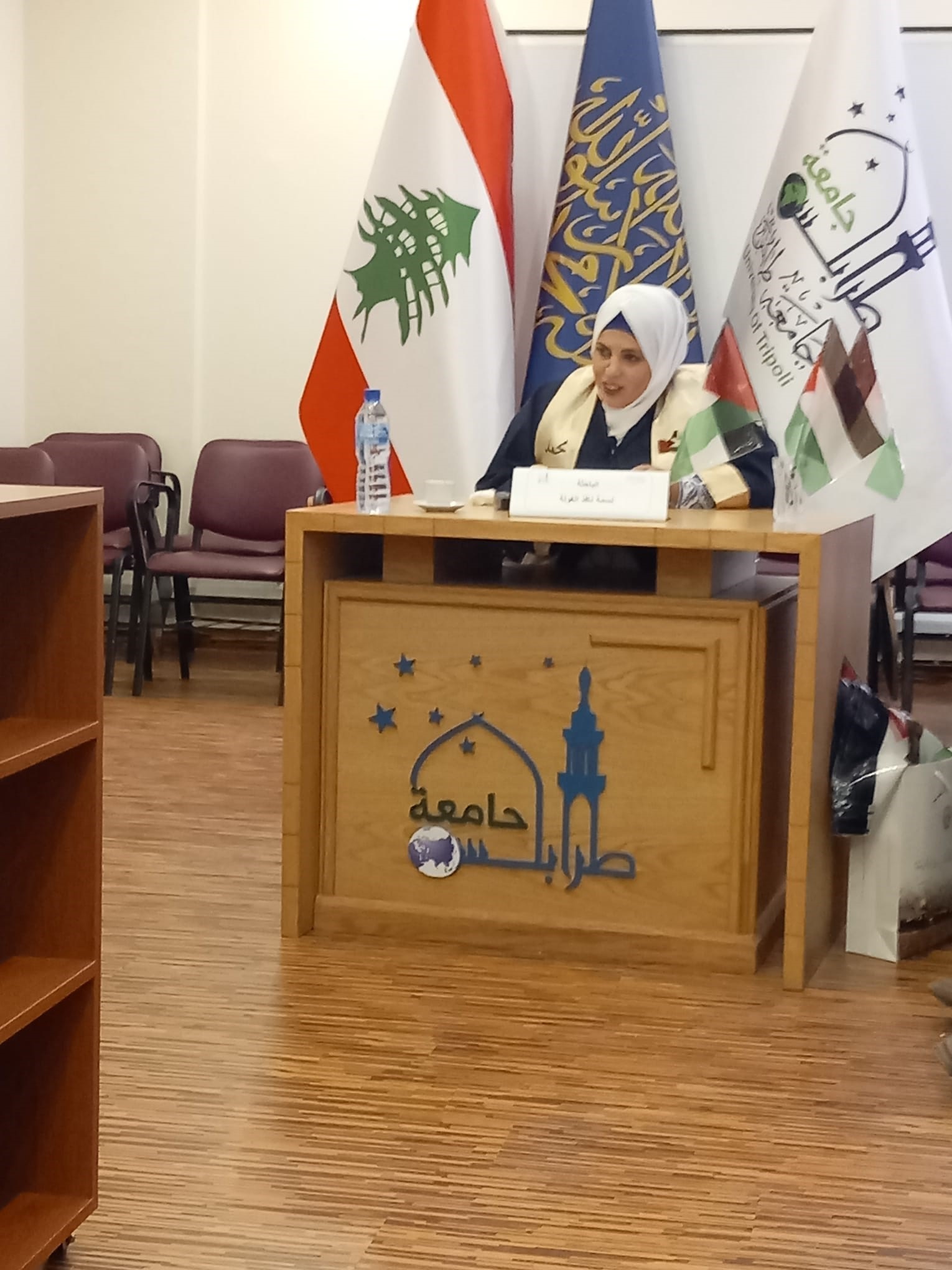
Neither her visual impairment, nor the difficulties she faced because of it, nor her family’s limited means stopped her from achieving her dream of earning a doctorate, making her the first blind woman to obtain this academic degree in 2023 in the Gaza Strip. Her thesis was titled “Manifestations of the Corruption of Social Bonds Within the Family and Ways to Treat Them: A Thematic Quranic Study” at Tripoli University in Lebanon.
The education of the blind needs longer sponsorship than others because it costs more; its rulings and steps are detailed in the guide Sponsoring a Student of Knowledge: Your Complete Guide.
Continuous sponsorship
She is Nasma As’ad al-Ghoula, one of the people of determination. The secret word behind her academic distinction, as she told us, is trust in God, persistence and resolve, the support of her parents and their constant prayer, and the generous sponsors from the people of Qatar standing by her from childhood up to the doctorate, through the “Rafaqa” initiative of Qatar Charity, which provides sponsorship for orphans, children of low-income families, people with special needs and others, and offers them comprehensive care including education.
Nasma joined schools for the blind in the primary and preparatory stages and obtained the highest marks in both. From that time (in 2007) she received sponsorship from Qatar Charity in the visual impairment category, then her sponsorship continued in the student of knowledge category during her university study, then support was given to her during her postgraduate journey until she finished the doctorate.
Among Nasma’s early suffering in education is that she was forced to join a general secondary school for girls near her home because the secondary school for blind girls was far from her home and needed extra expenses. Nasma needed to make great efforts to succeed in it, since it did not provide suitable study conditions and Braille education for her. Even so she obtained an average of 85 percent and was honored by the Ministry of Education.
Between challenges and ambition
Nasma joined the Faculty of Islamic Studies at the Islamic University of Gaza and graduated second in her class, and it was a source of joy that she was the first blind girl to give the graduates’ speech at the time. Because her ambition knows no limits, she continued her higher education and earned a master’s degree, then worked as coordinator of the Disability and Inclusion Services Center at the Islamic University, and her dream remained to continue her academic journey to obtain a doctorate.
When we asked her about the main difficulties that delayed her joining the doctoral stage by four years, she said: the financial situation and the lack of tuition and study costs, the worry and anxiety when choosing the university to join, the problems of having to travel outside Gaza to defend the thesis, and the question that runs in the mind: will I be able to complete the requirements of this educational task or not, because of my circumstances and the circumstances around me?
The starting point
Then she added confidently: God made it easy for my generous sponsor to provide the study installments, may God reward him well, and that was the starting point for serious thought about continuing study. During study, as in the master’s, she faced problems dealing with references to write her required research and then the thesis, because many electronic copies of books are available in PDF format, which the screen-reading program cannot read, so she would print these books in Word format and some in Braille. There were also difficulties of distraction and anxiety because of the unstable situation in Gaza and the occupation’s escalation from time to time, and the difficulties she faced while traveling to Lebanon from tension and hardship. But with God’s help, patience and the support of those around her from her family and female colleagues she managed to complete the whole doctorate in about 3 years.
A defining mark
On the occasion of achieving her dream, Nasma gave abundant thanks and great gratitude from the depths of her heart to her generous sponsors and to Qatar Charity, saying: since my childhood you never hesitated to extend a helping hand, and you never closed a phone in my face. She considered that Qatar and its people were a defining mark in her life with their material and moral support, and she prayed to God to keep their giving going, raise their standing and keep their grace.
Nasma aspires in the future to be a lecturer at Gaza’s universities to spread Islamic knowledge among students, to increase her participation in conferences and the publishing of various studies that address issues of people with disabilities, and also to increase the training that sharpens her skills so as to pass them on to students who are people of determination.
Read also:
Frequently asked questions about the education of the blind
What does a blind student need to complete higher education?
References in Braille or audio, screen-reading software, an escort or transport service, and extra time in exams. The absence of these means, not the disability itself, is what stops most blind students from continuing their studies.
Does sponsorship cover the additional needs of people with visual impairment?
Sponsorship programs for people with special needs include assistive devices, special references and rehabilitation alongside maintenance and fees. They differ from ordinary sponsorship because the cost is higher and the duration longer, and they may extend beyond graduation.
Why do many blind people stop at the secondary stage?
Because university assumes an ability to read independently, and the cost of alternative means jumps at this threshold. Those who find support at exactly this point finish; those who do not stop, however high their previous achievement.
How do I support the education of a person with a disability?
Through Qatar Charity’s program for sponsoring people with special needs, which covers education, rehabilitation and assistive devices. Sponsorship is annual and renewable, and the sponsor receives periodic reports on the sponsored person’s condition and achievement.