
This is the story of one student of knowledge’s sponsorship, but it explains why sponsorship is among the highest-impact education interventions. A brilliant student who drops out for material reasons loses not only a certificate but everything they would have produced afterward. In a world with 273 million children and adolescents out of school according to 2024 data (UNESCO), sponsorship becomes an intervention in the course of a life, not a passing donation.
From September 2017 Ms. Ridha Jadida began work as a university lecturer in the Faculty of Sharia and Law at the Indonesian state university “Ar-Raniry”, after earning a master’s degree in Islamic economics from the same university. She thus achieved what she most aspired to: excellence and academic teaching.
Ridha acknowledges that this success, achieved by completing university study and then the master’s stage and graduating from both with distinction, could not have happened without her family’s encouragement and especially her mother’s sacrifice. The mother was forced to work washing clothes to cover her daughter’s school expenses. Then came Qatar Charity’s sponsorship, considering Ms. Ridha a student of knowledge, from the third year of university study (the bachelor’s), and it continued until she finished the master’s stage at the start of 2017.
A mother’s sacrifice
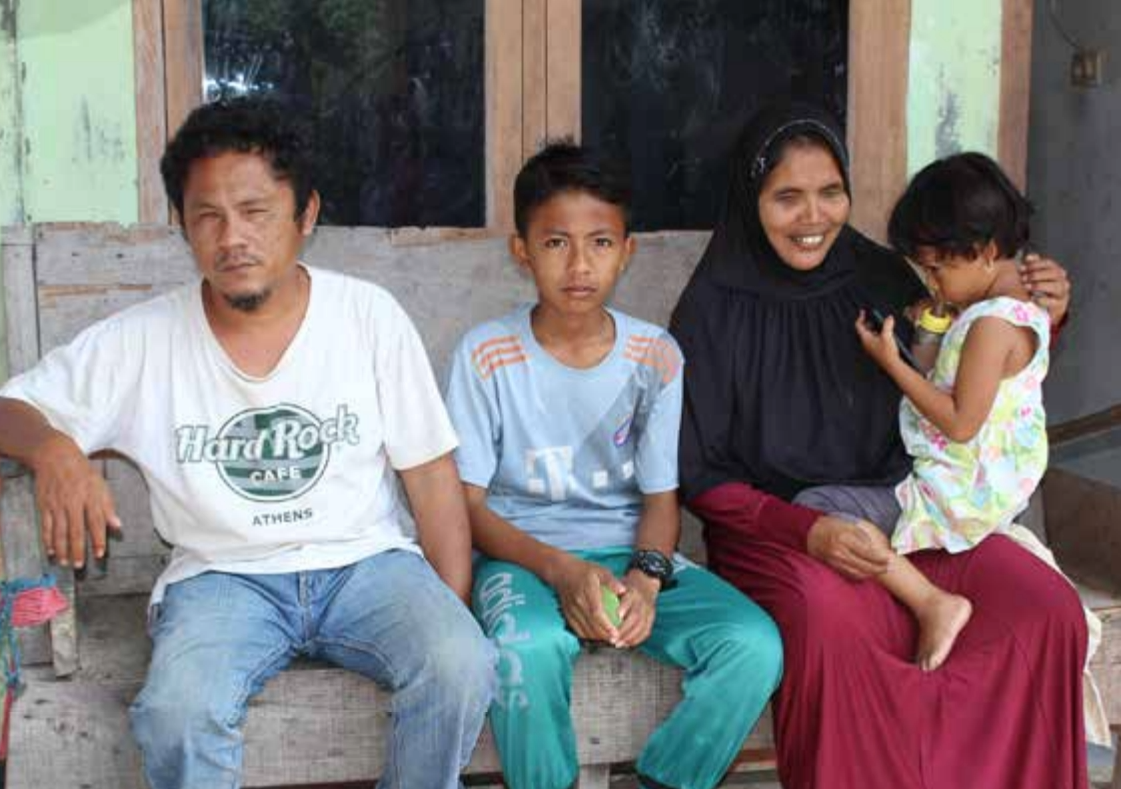
The heroine of this story, discussed in the second part of the book Witness to Success, is Ms. Ridha, who was born in the city of “Spang” in western Indonesia in 1991 to a family of limited means, the second of three siblings. Her father worked as a government employee on a low salary that did not meet the family’s living needs, including school expenses for her and her two brothers.
This pushed her mother to work. And because her mother had no particular craft, she was forced to wash and clean clients’ clothes. Whenever the expenses of Ridha and her brothers rose as they moved from one school stage to a higher one, their mother pushed herself harder to meet the growing educational requirements.
Ms. Ridha recalls the living conditions her family suffered, and her parents’ insistence that it should not affect their children’s continuing education however much it cost them. Ridha Jadida says: “Despite the family’s difficult living conditions, my parents never spoke of any financial problems in front of us. Whenever we asked them for something they would try to provide it for us. And if they could not, they gave us other reasons why they could not, so it would not affect our psychological state and our school achievement in our childhood years. Besides their continual urging of us to work hard, persevere and keep excelling. We learned later that they borrowed from relatives or neighbors at the start of every school year to provide what we needed.”
Motives for excellence
Ridha began to realize the scale of her family’s difficult material situation, and the weight it put on her parents, after she graduated from general secondary school.
When she enrolled in the Faculty of Sharia and Islamic Economics at Ar-Raniry University in Banda Aceh, she offered her mother to help her work, or to look for a job alongside her studies. But her mother refused firmly and said: “Your excellence will be a source of pride for us, and all my tiredness goes away when I rejoice in your future and your high standing in the future.”
And since among God’s ways is that ease comes with hardship, and victory with patience, Ridha began to breathe a sigh of relief after the student sponsorship she received from the Qatar Charity office in Indonesia. It was a starting point and a motive for her to continue her journey of academic distinction in the remaining years of the bachelor’s stage and beyond, and in her future life in general.
The sponsorship came through one of her university teachers, who submitted a request for her support to Qatar Charity’s office in the city of “Banda Aceh”, given her excellence and the weak living conditions of her family at the same time.
He said in his testimonial attached to the request that “the situation of her family of limited means was a motive for this intelligent student to be more determined to excel”. He stressed that “she has a strong drive to make her life better”, and the request was approved.
The turning point here deserves a pause: the problem was not the student’s ability or her wish, but the cost of continuing alone. This is exactly what sponsoring a student of knowledge addresses, which is why its effect shows quickly when it reaches the right case.
Distinction
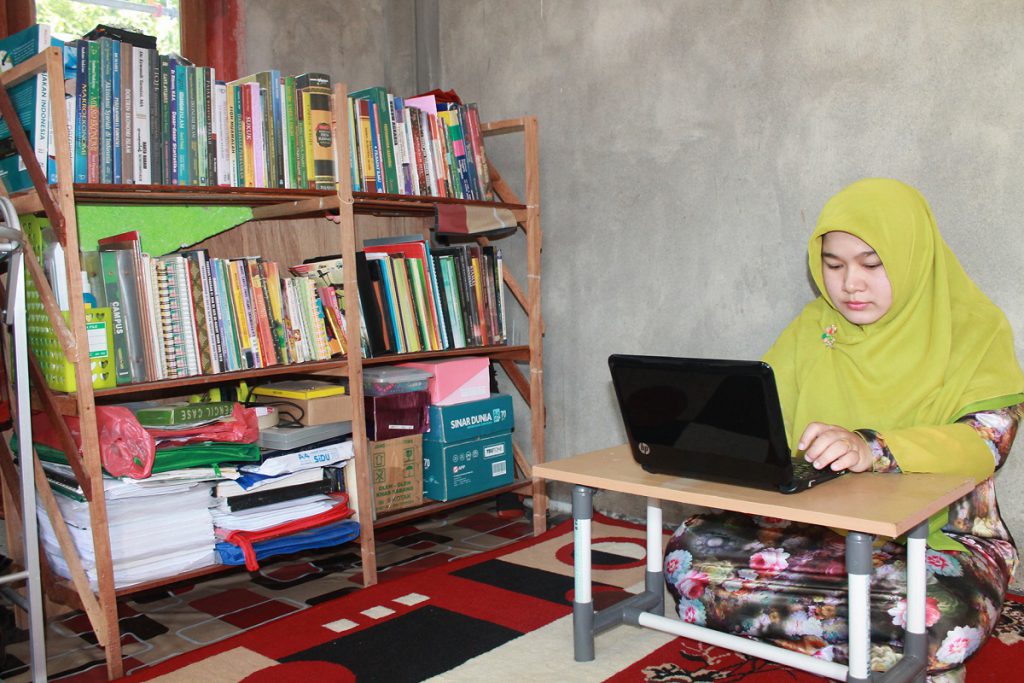
Ridha Jadida reaped the fruit of her continuous effort and diligence and was among the best graduates across the university’s faculties. She then earned a distinction with a cumulative average of (3.76). Her teachers in the faculty also testified to her ability to meet all the theoretical and practical requirements for graduation on time and with distinguished performance, while her peers had not yet finished even the theoretical requirements.
With her teachers’ support and welcome, in August 2014 Ridha continued her higher education, joining the master’s stage in the “Islamic Economics” department at the same university.
To help support her family and ease its living burdens, Ridha gives English qualification courses to newly enrolled university students once a week.
With her high determination Ridha managed to complete her study requirements and defend her thesis within two and a half years. The thesis was titled: (Compensation for the Seizure of Land Ownership from the Perspective of Islamic Sharia and Positive Law, Applied to the Village of Bunji Blang Cot).
The examination committee gave Ms. Ridha’s thesis a distinction. She also received the praise of the reviewers. Professor Nazaruddin Abdul Wahid, head of the examination committee and dean of the faculty of economics at the State Islamic University “Ar-Raniry”, said of her: “Ridha’s thesis is distinguished, she made a clear effort in it, and it addressed a question not covered before. We recommend that it be a basic reference for students in the future.”
Ridha Jadida has her eye on a doctorate
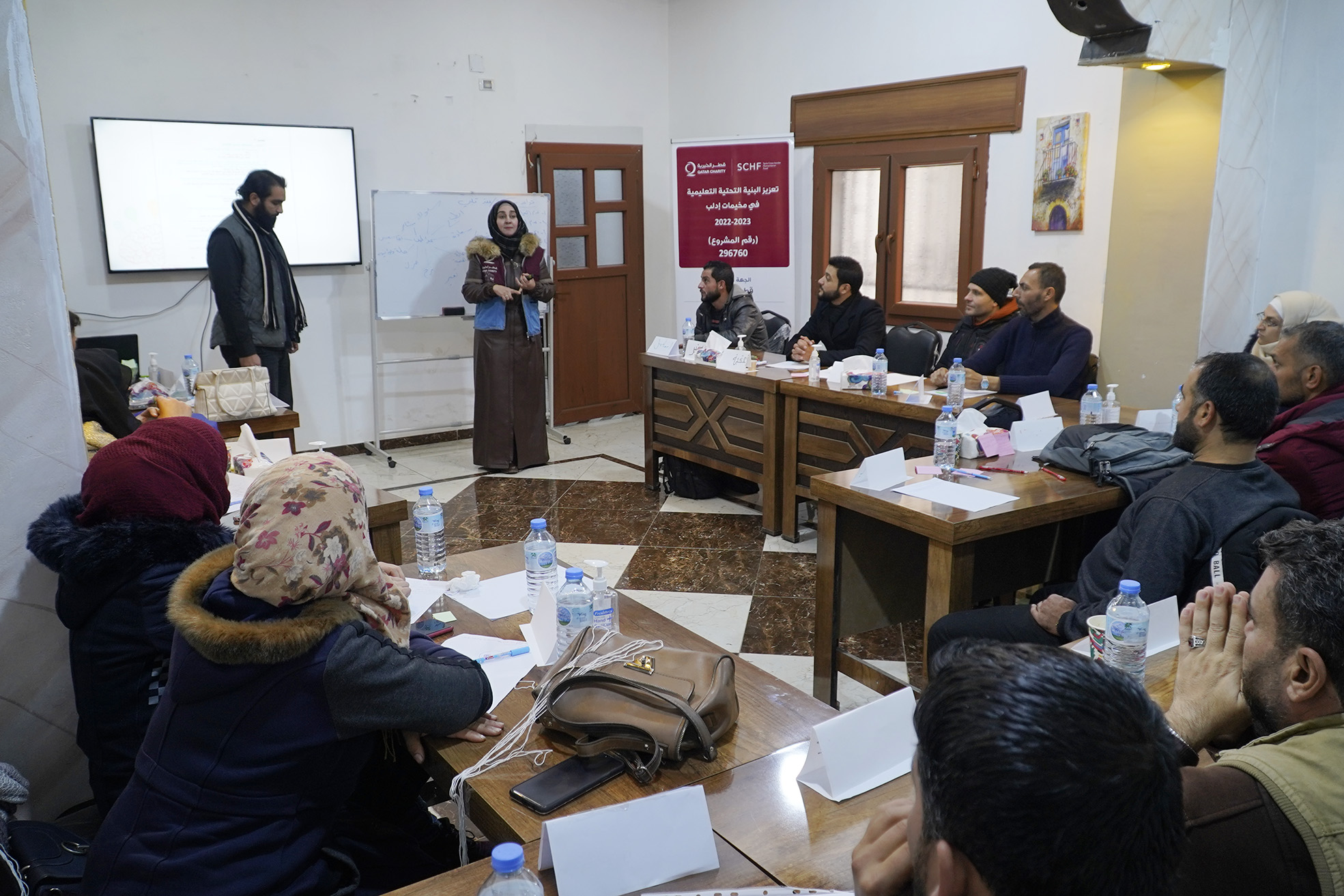
Since September 2017 Ms. Ridha has looked ahead to a new stage in her life, the stage of working and investing what she learned for a new generation of students of knowledge. She began by teaching two Islamic economics subjects to third-year students in the Faculty of Sharia and Law at the same university she graduated from. She had not expected that, because new teachers often teach first-year students.
In acknowledgment of the people of virtue and their role in the successes she has been able to achieve so far, Ms. Ridha says of the sponsorship with relief and happiness: “Thanks to it I was able to continue my university and higher education with a high average, and to ease the pressure on my parents. They could then focus on caring for my two brothers and paying their fees only.”
Ridha married in 2016 Mr. Miswar Muhammad, a researcher in Arabic language teaching who has memorized the Book of God completely. She devotes her time to caring for her family and raising her child, teaching at the university, and caring for her father and mother, hoping to repay them some of what she owes them.
Ridha thanks God Almighty for the many blessings He bestows on her, and she still looks strongly toward continuing to a doctorate. What stands between her and this beautiful dream is the high tuition fees, which exceed her financial means, as she told us.
A precious gift
Among the moments that do not leave Ms. Ridha’s memory is one tied to a gift with a moving story. After she earned her master’s degree, the Qatar Charity office in Indonesia told her it intended to give her a gift for the occasion. Qatar Charity’s representative asked her what kind of gift she wanted the office to give her. Ridha tells us: I told them directly I want a washing machine. When they brought it, she told them to deliver it straight to her mother’s house. And she said with tears in her eyes: I want to give the most precious gift that came to me in appreciation of the most beautiful achievement of my life (graduation) to my mother, without whose great care and sacrifices I could not have completed my studies to reach the university gate. How great was her joy at her mother’s happiness, as the mother was surprised by this gift.
Ms. Ridha advises children of families of limited means to face difficulties with sincere determination and rise in the ranks of knowledge, saying: “Strive hard in learning and work, work for your worldly life as if you will live forever, and work for your afterlife as if you will die tomorrow. And follow every effort with supplication, for effort without supplication is arrogance, and supplication without effort in work is a lie.”
The effect here did not stop at one graduate. Ridha teaches today, meaning the sponsorship passed from one learner to everyone who learned from her. This is what distinguishes the story of a student of knowledge’s sponsorship from any aid that ends when it ends, and what makes education the highest-return intervention of any other, as detailed in the benefits of education.
Read also:
Frequently asked questions about the story of a student of knowledge’s sponsorship
What does student of knowledge sponsorship cover?
It covers the cost of keeping the student in their studies, the item families usually cannot manage after the first stage. In Ridha Jadida’s case the sponsorship began in the third university year and continued until the end of the master’s.
Who is nominated for sponsorship?
The outstanding student who faces a material obstacle, not an obstacle of ability. In this story the nomination came from one of the university teachers to Qatar Charity’s office in Banda Aceh, attached to a testimonial about her excellence and her family’s circumstances.
Does the effect of sponsorship stop when the student graduates?
No. The sponsored student in this story became a university lecturer teaching Islamic economics, so the effect of the sponsorship passed to every cohort she taught after graduating.
Why is sponsorship among the highest-impact education interventions?
Because it addresses the direct cause of dropping out, which is cost, not wish or ability. With 273 million children and adolescents out of school worldwide according to 2024 data (UNESCO), keeping a capable student on their path is cheaper and faster than bringing them back after they drop out.
One sponsorship took a student to a teaching seat, and then to those she taught afterward. Contribute to sponsoring a student of knowledge through Qatar Charity.
From the book “Rafaqa … the Largest Family in the World” – Ghiras series no. (11) – Qatar Charity (adapted).