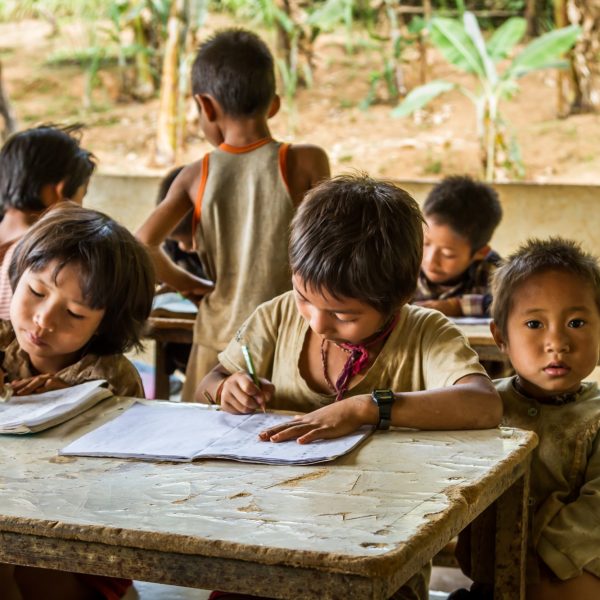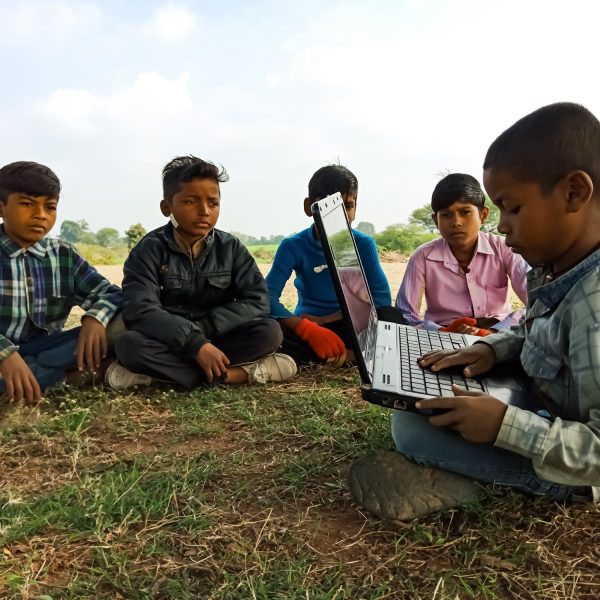

The quality of education is the difference between a child attending and a child learning. The evidence is stark: 70 percent of ten-year-olds in low- and middle-income countries cannot read and understand a simple text, up from 57 percent before the pandemic (World Bank). That is, millions of children are inside schools but outside learning.
Raising the quality of education begins at the level of one student, detailed in Sponsoring a Student of Knowledge: Your Complete Guide.
Education remains one of the most important tributaries of societies for achieving their renaissance and correcting their course. Countries that made leaps in several fields found that attending to the education sector and giving it priority is the best solution for getting past the challenges and ills that threaten their children’s future. Yet many other countries still suffer from a lack of the resources necessary to raise the quality of education for their children, despite the great efforts they make to reach learning resources. From here the role of humanitarian and international institutions in supporting this path stands out. In this article we review Qatar Charity’s efforts to improve the quality of education within deprived and disadvantaged communities.
In the article “Efforts to Raise Education” you will learn about:
- Weak education levels in low-income countries
- School dropout and interruption of education
- Qatar Charity’s model of supporting education among disadvantaged communities
- Opening the largest educational city for orphans in Sudan,
- Opening Al-Ihsan School 2
- Renewing cooperation with the Indonesian government to support the education sector
- Aid exceeding QAR 2 million to support education in 18 countries
- Opening Dar al-Salam School in Somalia
- Launching 10 projects in Gaza for the benefit of thousands of Gaza students
- The “My Right to Learn” campaign to support 3,000 students facing hardship
- The “Cyclists for Education” campaign to support rebuilding a school in Gaza
- Supporting 270 thousand children in partnership with “Education Above All”
Weak education levels in low-income countries
Many countries make great efforts to spread education in their societies. In numerical and theoretical terms, the number of children and young people studying in the various stages has multiplied. But that does not necessarily reflect on the quality of education.
In countries such as Kenya, Tanzania and Uganda, nearly 75 percent of students in the third stage fail to read simple sentences. About 50 percent of fifth-stage students in Indian villages cannot do a simple calculation.
One of the biggest challenges facing developing countries is the weakness of education systems and their inability to help children and young people acquire the skills that future jobs require, and develop in them the spirit of creativity and constructive thinking.
School dropout and interruption of education
The 2017 Global Education Monitoring Report indicates that about 61 million children of primary school age are not given the chance to go to school. Girls make up nearly 53 percent of the children not studying. This includes many deprived groups such as people with special needs or those living in conflict areas.
Conflicts and natural disasters cause more than 75 million children, aged between 3 and 18, to be deprived of education.

Qatar Charity’s model of supporting education among disadvantaged communities
Qatar Charity gives great importance to tackling illiteracy and ignorance within disadvantaged communities, whatever the challenges each community faces. It does so by building schools and classrooms and sponsoring students. The organization also seeks to raise the quality of education by providing a good and modern level through training staff and using modern technologies in the educational process.
It relies on the standards in force while taking account of the community’s particularity. The organization has concluded local and international partnerships in line with the United Nations plan to achieve Sustainable Development Goal 4. This has been reflected on the ground in recent years:
Opening the largest educational city for orphans in Sudan,
aimed at fully and directly caring for 600 orphans, in addition to benefiting 6,600 orphans and their families and the most vulnerable groups in different areas south of Khartoum state.
Opening Al-Ihsan School 2
It opened the second Ihsan school, after the success of this experience, which is considered a successful model of a non-profit school, as it offers practical solutions for the children of Arab communities living in Qatar, especially those whose countries are going through difficult circumstances.
Renewing cooperation with the Indonesian government to support the education sector
Qatar Charity renewed the memorandum of understanding with the Indonesian government, signed in 2006, to carry out projects in vital sectors, including education and raising its quality, at a total value estimated at about thirty million dollars, from which twenty-seven cities in 8 Indonesian provinces benefit.
Aid exceeding QAR 2 million to support education in 18 countries
Qatar Charity provided several educational aid items worth more than QAR 2 million to 2,258 orphans in 18 countries (from 2016 to 2019). The educational aid included buying school supplies such as the school bag, textbooks and stationery, school uniforms, paying school fees, and paying transport costs.
Opening Dar al-Salam School in Somalia
Qatar Charity opened the Dar al-Salam Primary School in the city of Garowe in Somalia, funded by donors in the State of Qatar. The school, with an area of 400 square meters, has a number of classrooms and school administration rooms, and is expected to benefit 400 students.
Launching 10 projects in Gaza for the benefit of thousands of Gaza students
Qatar Charity launched 10 educational projects in Gaza, Palestine, over eight years (until 2018), from which hundreds of thousands of students at various stages benefited, with the support of donors and partners, worth QAR 14.5 million.
The “My Right to Learn” campaign to support 3,000 students facing hardship
In 2018 it launched the “My Right to Learn” campaign to meet the needs and study expenses of 3,000 male and female students, children of low-income families who are denied their right to education.
The “Cyclists for Education” campaign to support rebuilding a school in Gaza
In 2016 it launched the second phase of the “Cyclists for Education” initiative in cooperation with the “Qatar Cyclists” team, aiming to raise QAR 5,000,000 to rebuild a girls’ school in Gaza that takes 1,000 students.
Supporting 270 thousand children in partnership with “Education Above All”
In 2015 it supported children deprived of basic education through the “Teach Me” campaign in partnership with the “Educate A Child” program of the “Education Above All” foundation, aiming to raise awareness of the danger of millions of children around the world being deprived of education because of hardship, conflicts, natural disasters and discrimination. The campaign aimed to raise QAR 110 million to cover the cost of educating 270,000 children for one year.
Why is the quality of education falling despite higher enrollment?
Because the expansion of enrollment outpaced the expansion of teachers and classrooms. When the number of students doubles without a parallel increase in qualified teachers, the number of students per class rises and each student’s share of the teacher’s time falls.
The matter is sharper in low-income countries, where the number of children out of school rose 29 percent since 2015 while it fell globally by less than 1 percent (UNESCO, Global Education Monitoring Report). That is, the pressure is concentrated where quality is already weakest.
Frequently asked questions about the quality of education
What is meant by the quality of education?
It means that the student actually gains the skills targeted for their school stage, not just passes through its years. Its clearest indicator is the ability to read, understand and calculate at the expected age.
Why do many children not learn despite being enrolled in school?
For overlapping reasons: an unqualified teacher, a crowded class, a shortage of teaching materials, and repeated interruptions. The result is that 70 percent of ten-year-olds in low- and middle-income countries cannot read a simple text (World Bank).
How can the quality of education be raised?
By starting with the teacher, because training them raises the level of hundreds of students at once, then by easing class crowding, providing teaching materials and ensuring study continues without interruption.
What is the teacher’s role in the quality of education?
It is the factor with the highest impact. The curriculum and the building do not make up for an unqualified teacher, while a qualified teacher can achieve good results with limited means. That is why teacher training is the intervention with the highest return.
Every school seat saved brings a return that lasts for decades. Contribute to supporting education through Qatar Charity.