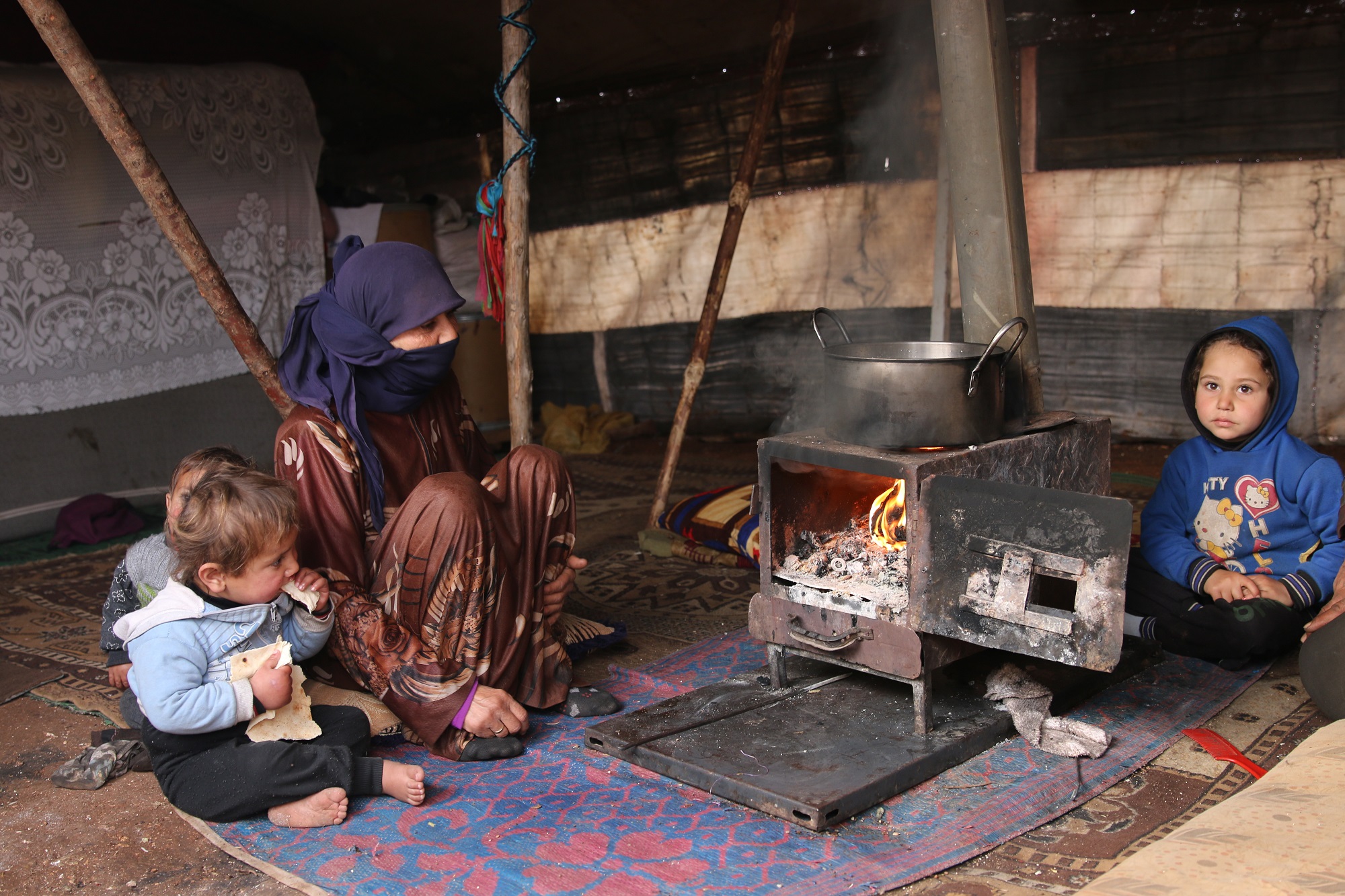

Education and hardship are two sides of one crisis. When a child leaves school, they lose not only school years but their chance of higher income, better health and a longer life. Globally, there are 273 million children and adolescents out of school according to 2024 data, 79 million of them of primary school age (UNESCO). This article reviews how education breaks the cycle of hardship, what stands in the way, and what we know from evidence and not impressions.
Sponsoring one student of knowledge is the simplest practical entry to this, detailed in Sponsoring a Student of Knowledge: Your Complete Guide.
What is the role of education in breaking the cycle of hardship?
Education does not break hardship through one path but through five parallel paths, each with an effect on the individual and a wider effect on society.
| Dimension | Effect on the individual | Effect on society |
|---|---|---|
| Job opportunities | Skills that open jobs with higher and more stable income | A qualified workforce that attracts investment |
| Productivity | Better performance and higher pay for the same time | Sustainable economic growth that does not depend on aid |
| Innovation | Ability to solve problems and develop alternatives | Local solutions to local problems |
| Women’s empowerment | Economic independence and a wider say in the family | Lower rates of early marriage and better children’s health |
| Social barriers | Social mobility beyond the circumstances of birth | Higher cohesion and narrower gaps |
But school enrollment alone is not enough. Estimates indicate that 70 percent of ten-year-olds in low- and middle-income countries cannot read and understand a simple text, up from 57 percent before the pandemic (World Bank, report on the state of learning deprivation). That is, a school seat without real learning does not break the cycle, it postpones it. That is why the benefits of education are not measured by the number enrolled alone but by what they actually learn, which we review in 10 Benefits of Education and Their Impact on Individuals and Societies.
What challenges keep education from deprived children?
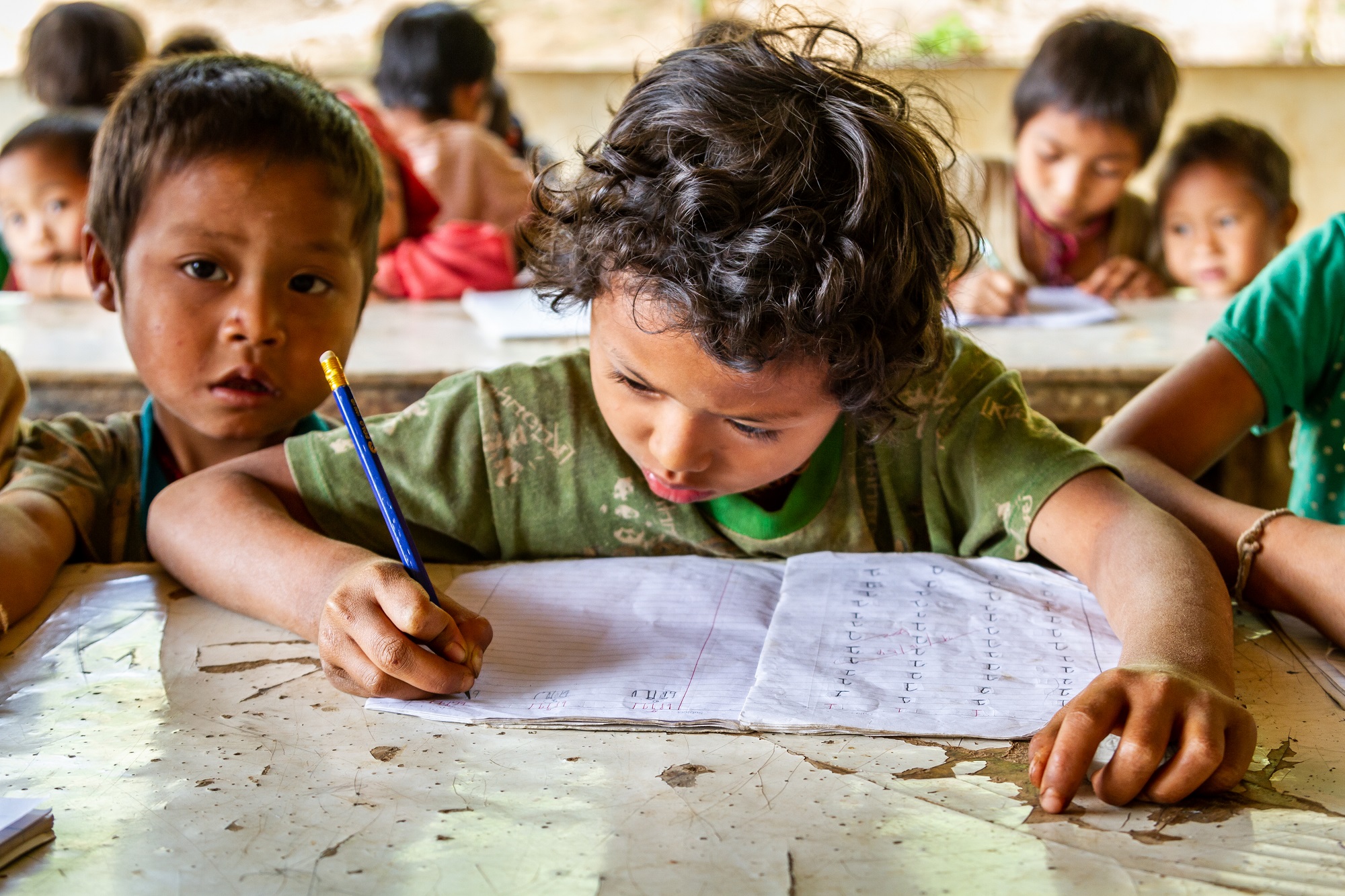
The challenge is not one, and the general trend is not reassuring. Since the adoption of Sustainable Development Goal 4 in 2015, the number of children out of school has fallen by less than 1 percent globally, while it rose 29 percent in low-income countries (UNESCO, Global Education Monitoring Report).
- Direct and indirect cost: fees, uniforms and transport, as well as the child’s lost income when they work instead of studying.
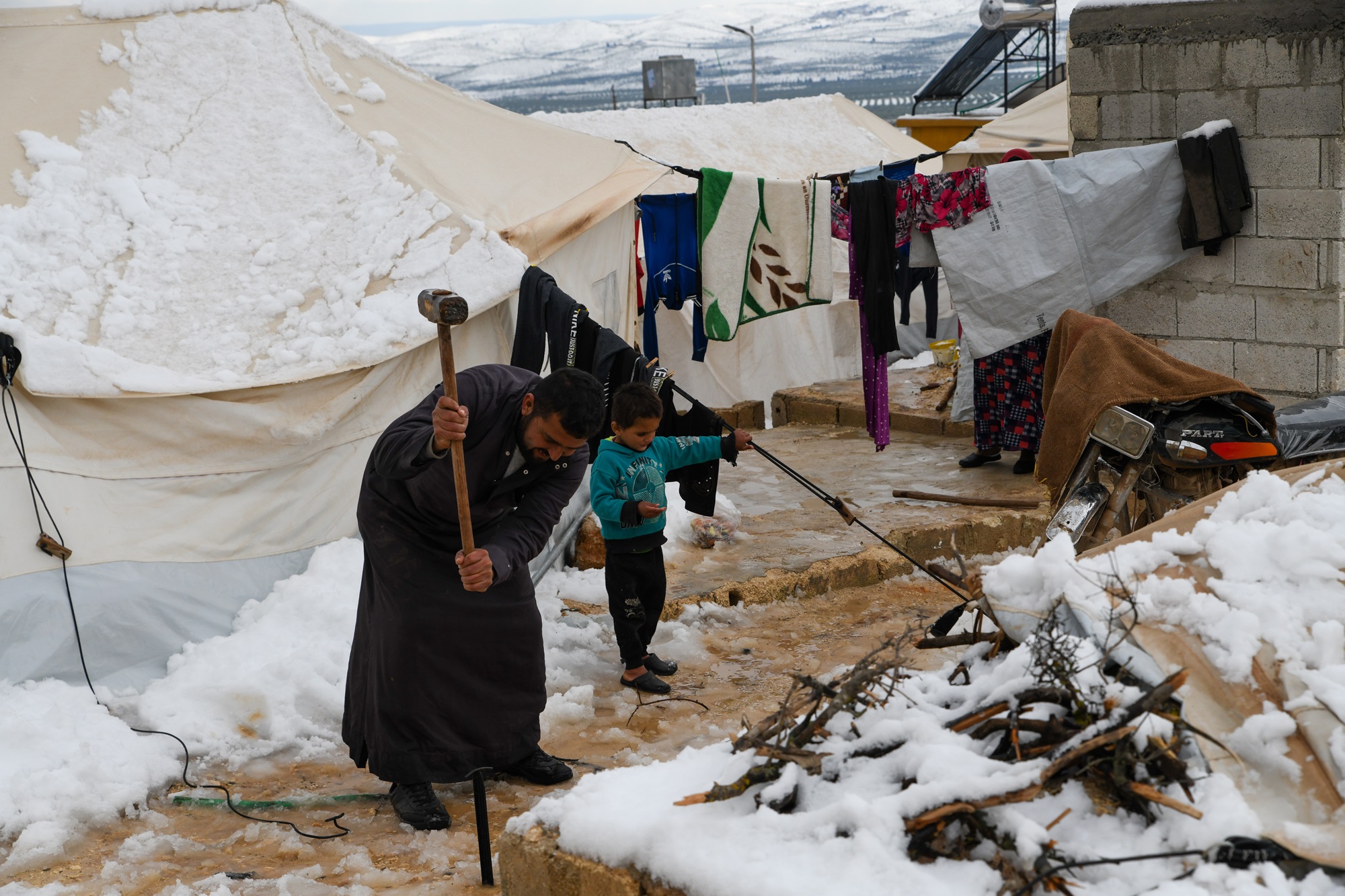
- Conflict and displacement: 258 million children and adolescents in 87 countries had their education affected by crises, of whom 93 million are entirely out of school (Education Cannot Wait, 2026).
- Distance: the lack of a nearby school turns education into a hard daily journey, and girls are often the first to drop out.
- Quality of education: an unqualified teacher or a crowded classroom means years of study without learning.
- The digital gap: interrupted schooling widens the gap when no alternatives for distance learning are available, which Technology and Its Role in Strengthening Education addresses.

For the detail of these obstacles and how to address them one by one, see 10 Challenges That Deprive Children of Their Right to Education.
How has education lifted families out of hardship?
The global evidence translates on the ground into individual paths. Building a school in a deprived area does not only change the numbers in reports, it changes the choices of one particular family: a child who finishes school instead of working, a girl who passes the age of early marriage while still in her school seat, and a graduate who returns as a teacher in the same village.
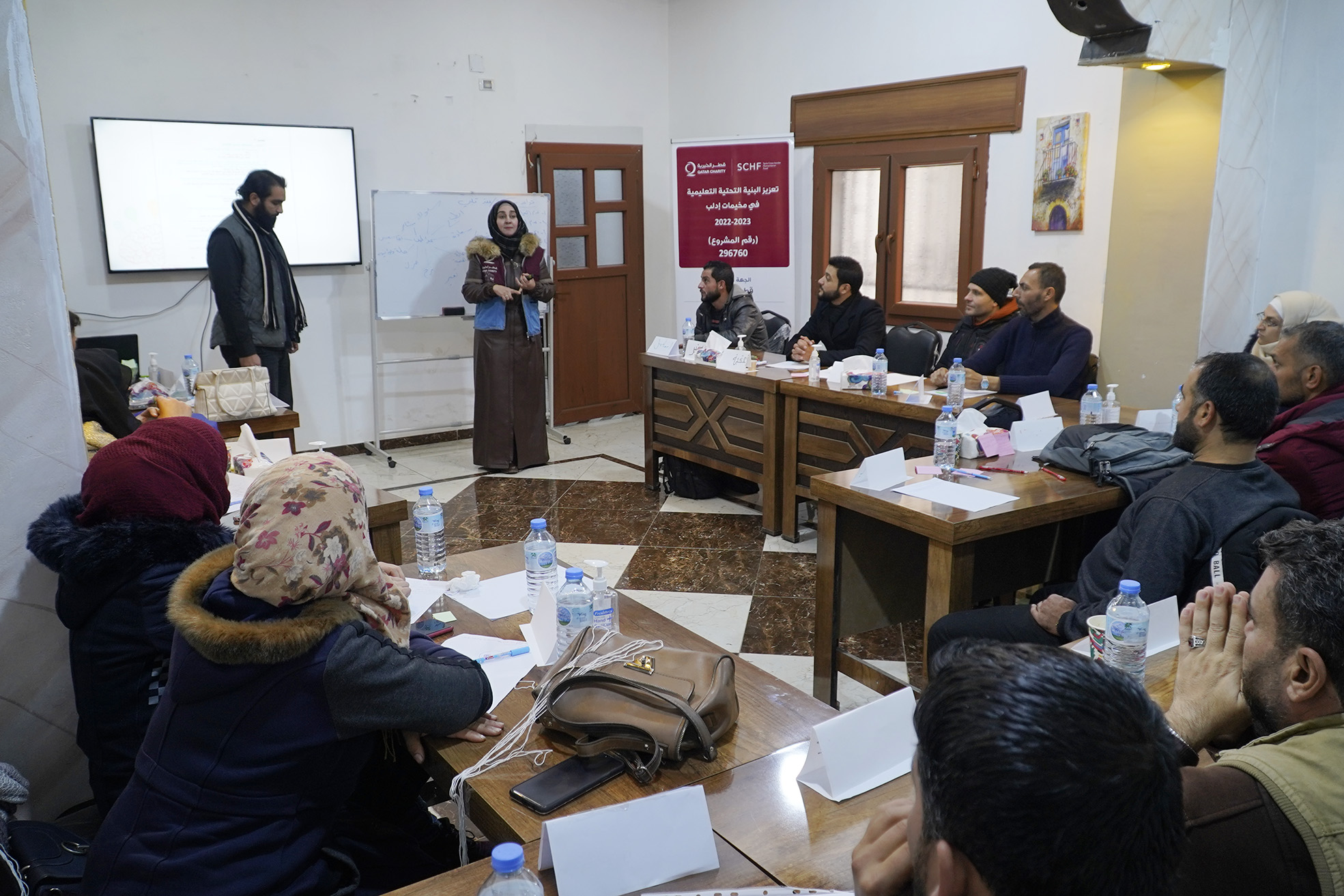
Qatar Charity works on this path by building schools, training teachers and sponsoring students in a number of countries, so that support is not limited to the building but extends to what keeps education going. An example is Teacher Training in Northern Syria, where training one teacher raises the quality of education for hundreds of students at once.
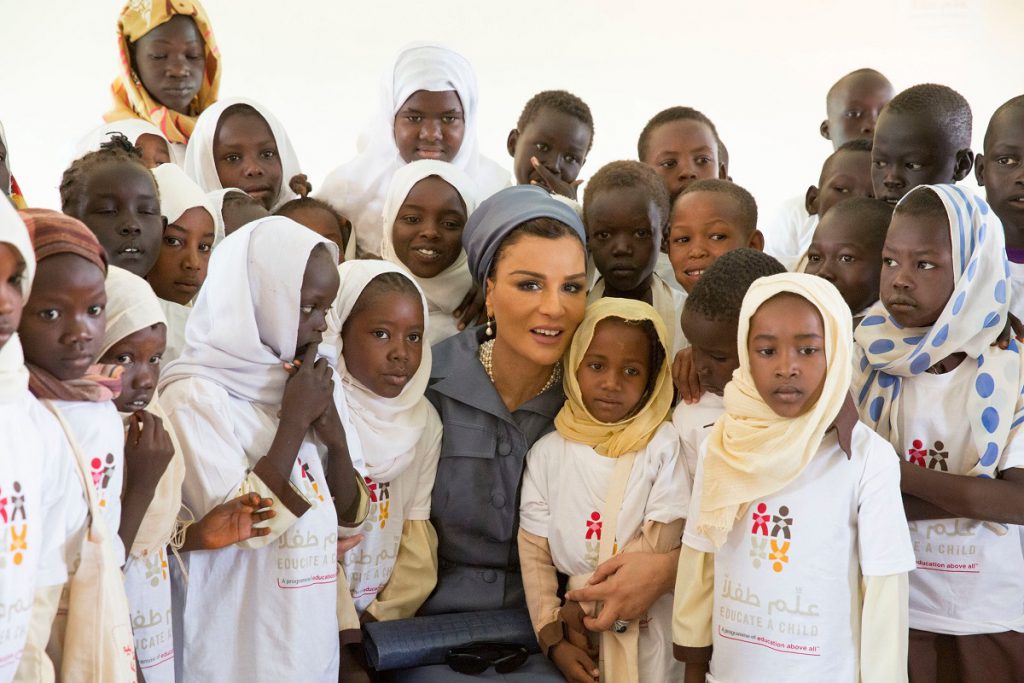
At the Qatari level, supporting education has been one of the most prominent paths of humanitarian work, as in the leadership of Her Highness Sheikha Moza bint Nasser in the field of education.
Why is investing in education the highest return?
Because its effect does not stop at the direct beneficiary. The educated child often becomes a parent who teaches their children, so the effect passes from generation to generation. This is the core idea of “breaking the cycle”: not addressing hardship once, but cutting its inheritance.
When we speak of education and hardship together, we are speaking of the cheapest humanitarian intervention with the longest effect: a school seat today saves years of aid tomorrow. That is why the equation of education and hardship remains the right entry point for any serious development work.
Read also:
Frequently asked questions about education and hardship
How does education help reduce hardship?
Education raises an individual’s income through skills that open better job opportunities, increases productivity, and improves health and family decisions. Most importantly, its effect passes to the next generation, as the educated often teach their children, which cuts the inheritance of hardship instead of addressing it once.
How many children are deprived of education in the world?
According to 2024 data, there are 273 million children and adolescents out of school worldwide, 79 million of them of primary school age, 64 million at the lower secondary stage and 130 million at the upper secondary stage (UNESCO).
What is the relationship between school dropout and hardship?
The relationship is circular. Hardship pushes a family to take a child out of school to work or to save the cost of study, and dropping out in turn lowers their future income, reproducing hardship in the next generation. So early intervention costs less and has more effect than treating it later, as the effect of a breakfast meal in limiting school dropout shows.
How does Qatar Charity support the education of deprived children?
Qatar Charity builds and equips schools, trains teachers, and sponsors students to cover the cost of continuing their studies, in a number of countries where education is a humanitarian priority. You can contribute to these projects through the donation page dedicated to education.
Start now: your contribution to the education of one child changes not only their school year but the course of their life. Donate to support education through Qatar Charity.